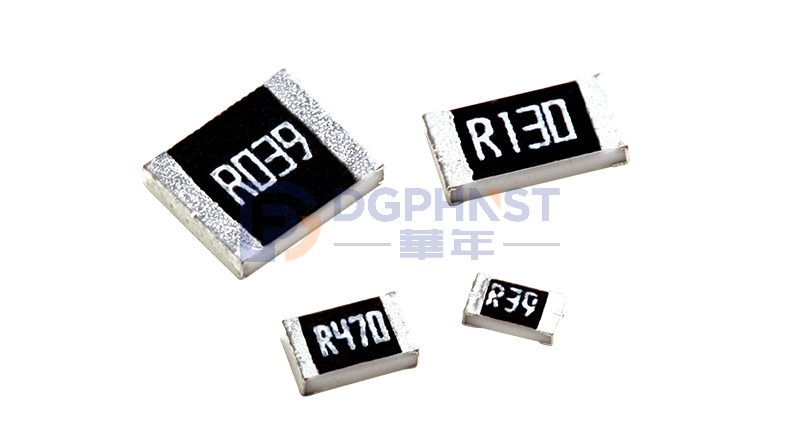
In what aspects is the stability of alloy resistors reflected?
In electronic circuit design, the stability of resistors is a key factor in ensuring the long-term reliable operation of equipment. Among various types of resistors, alloy resistors have been widely used in fields such as current detection, power management, and precision instruments due to their excellent stability. So, what are the specific manifestations of the stability of alloy resistors?
1、 Excellent temperature stability
One of the most prominent advantages of alloy resistors is their extremely low temperature coefficient (TCR). The temperature coefficient represents the degree to which the resistance value changes with temperature. High quality alloy resistors with TCR as low as ± 10 ppm/℃ or even lower. This means that when the ambient temperature undergoes drastic changes, the resistance value of the alloy resistor changes minimally, ensuring the accuracy of circuit parameters and avoiding performance degradation or calculation errors caused by temperature drift.
2、 Outstanding long-term stability and aging resistance
Long term stability measures the ability of a resistor to maintain its resistance value unchanged after prolonged power on and operation. The metal alloy material used in alloy resistors has a stable crystal structure and can effectively resist internal and external environmental erosion through special packaging processes. Even when working continuously for thousands of hours under harsh conditions such as high temperature and high humidity, the resistance drift rate of alloy resistors is usually very small, demonstrating excellent aging resistance and greatly extending the service life of the equipment.
3、 Low parasitic inductance and excellent frequency characteristics
Due to the fact that alloy resistors typically use thin films or bulk metals as resistors, their structural design can effectively control the generation of parasitic inductance. This makes the alloy resistor perform well in high-frequency circuits, and its impedance does not significantly change with increasing frequency. For application scenarios that require fast response and accurate current measurement, this stable frequency characteristic is crucial.
4、 High power load and stability
Alloy resistors can withstand high power loads and maintain stable resistance even when subjected to power. This is due to the excellent heat dissipation performance and high temperature resistance of alloy materials. Even under continuous high current flow, the resistor will not experience performance cracking or sudden resistance changes due to overheating, ensuring the stability and safety of the power circuit.
5、 Strong resistance to sulfurization and corrosion
In industrial or automotive environments with high levels of sulfur-containing gas, silver electrodes of ordinary resistors are prone to sulfurization reactions, leading to resistor failure. Many alloy resistors use special electrode materials and protective coatings, such as pure tin plating or alloy cap structures, which can effectively resist the corrosion of sulfides and other corrosive gases, maintain the reliability of electrical connections, and improve stability in harsh environments.
summary
In summary, the stability of alloy resistors is a comprehensive reflection, covering multiple dimensions from temperature changes, long-term use, high-frequency operation, high-power loads, and even adaptation to harsh environments. It is precisely these reliable stability performances that make alloy resistors an indispensable core component in applications that require strict circuit performance. When selecting resistors, fully considering their stability performance is an important part of ensuring the long-term stable operation of the entire electronic system.