
Classification and characteristics of main materials for inductors
Inductance, as a core component in electronic circuits, is closely related to its performance and material selection. According to the search results, the manufacturing materials of inductors can be divided into the following categories, covering key parts such as magnetic cores, coils, insulation, and packaging:
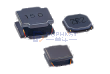
1、 Magnetic core material
The magnetic core is the core component of an inductor, which directly affects the inductance, losses, and anti saturation ability. Common magnetic core materials include:
Ferrite
Composition: Ceramic composite material composed of iron oxide and metal oxides such as manganese, zinc, nickel, etc.
Features: Low high-frequency loss, high resistivity, suitable for MHz level high-frequency circuits (such as switching power supplies, RF modules).
Limitations: Low saturation magnetic flux density, easy saturation in high current scenarios, and weak mechanical strength.
Alloy powder core
Ingredients: FeSiAl, FeNi, iron-based amorphous alloys, etc.
Features: High saturation magnetic flux density (more than twice that of ferrite), suitable for high current scenarios (such as PFC circuits, server power supplies).
Limitations: High frequency losses and higher costs compared to ferrites.
Amorphous/nanocrystalline materials
Composition: Amorphous alloy or nanocrystalline composite material.
Features: Extremely low hysteresis loss, good high-frequency adaptability, suitable for high-efficiency inductors and new energy equipment.
Limitations: The production process is complex and the cost is high.
Silicon steel sheet
Application: Low frequency high-power scenarios (such as transformers, motor drives), high mechanical strength, but significant high-frequency losses.
2、 Coil material
The coil is responsible for conducting current and storing electromagnetic energy, and its main materials are:
Copper wire
Advantages: Excellent conductivity (conductivity of about 58 MS/m), good ductility, widely used in wound inductors.
Applications: high-frequency inductors, high-power inductors, etc.
Aluminum wire
Advantages: Low cost, light weight, but slightly less conductive than copper (conductivity of about 37 MS/m), mostly used in low-cost scenarios.
3、 Insulation and packaging materials
Insulation material
Skeleton materials: plastic, rubberwood, ceramic (used for fixing coils, ceramic is commonly used in high-frequency scenarios).
Coating/encapsulation: Epoxy resin, phenolic resin (to enhance pressure resistance and moisture resistance).
Packaging material
Magnetic composite materials: injection molded materials such as carbonyl iron powder mixed with resin, used for integral molding of inductors, with high density and compressive strength.
Shielding material: Metal alloys (such as FeSiCr) are used to suppress magnetic leakage and noise, commonly found in molded inductors.
4、 Special process materials
Integrated inductor material
Ingredients: Carbonyl iron powder, FeSiCr alloy powder, formed by composite pressing of magnetic powder and resin.
Advantages: Small size (reduced by 45% compared to ferrite), high temperature resistance (155-180 ℃), strong saturation resistance, suitable for automotive electronics and AI servers.
Injection molded inductor material
Process: Vacuum injection molding of magnetic paste (including magnetic powder and resin) to achieve the integration of high-density magnetic cores and coils.
Thin film inductor material
Process: Metal or alloy thin film deposition on substrate, photolithography molding, suitable for high-frequency microwave circuits.
Key points and trends of material selection
High frequency applications: Priority should be given to ferrite or nanocrystalline materials, balancing low loss and high frequency stability.
High power scenario: Alloy powder core or amorphous material is superior, with outstanding anti saturation ability.
Miniaturization demand: Integrated molded inductors (carbonyl iron powder) and thin film inductors are the mainstream directions.
High temperature environment: Developing magnetic powder materials that can withstand 180 ℃ (such as amorphous powders developed by Mingpu Optoelectronics) has become a trend.
By selecting appropriate material combinations, the energy density, frequency response, and reliability of inductors can be optimized to meet the needs of different scenarios.