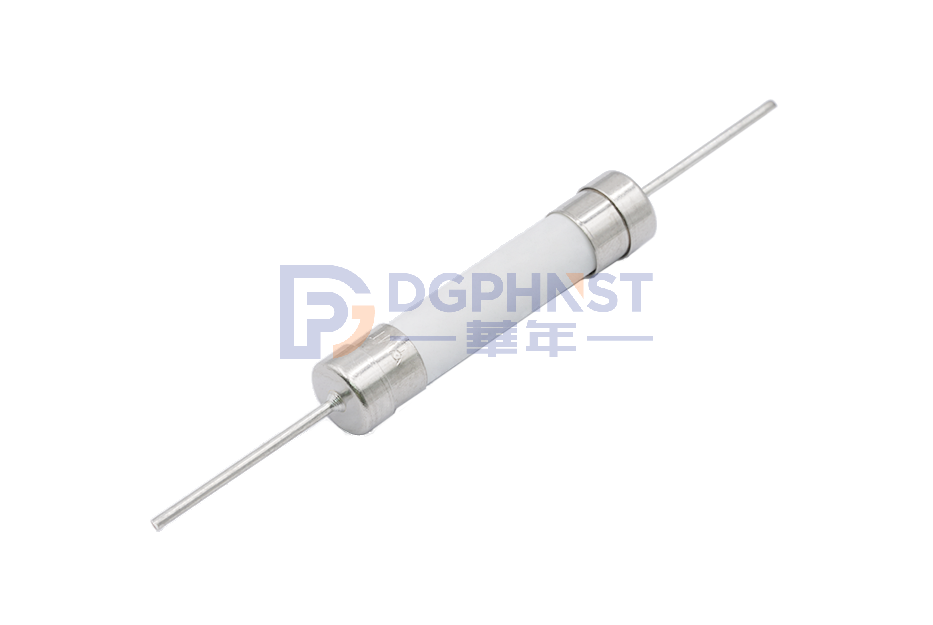
Is it better to have a higher I ² T in disposable fuses? This is a common question for many engineers and enthusiasts when choosing circuit protection components. Simply put, the higher the I ² T value of a fuse, the better, but it needs to be balanced according to specific application scenarios. The I ² T parameter of the fuse, also known as the melting integral, represents the ability of the fuse to absorb thermal energy in the event of overload or short circuit. Understanding the meaning of fuse I ² T can help make more appropriate choices.
From the perspective of anti-interference, high fuse I ² T does have advantages. The higher the I ² T value of the fuse, the more it can withstand larger surge currents or longer overload times without melting. For example, during motor start-up, power switching, or lighting on/off, the circuit often generates instantaneous pulses. A high fuse I ² T can avoid misoperation and improve system stability. Therefore, in these scenarios where there is a surge current, it is reasonable to choose a higher fuse I ² T.
However, high fuse I ² T may also lead to a decrease in protection sensitivity. When a real overcurrent fault occurs in the circuit, a high fuse I ² T will cause a delay in melting, leading to the accumulation of fault energy and increasing equipment damage or safety risks. In precision electronics, data circuits, or semiconductor protection, quickly cutting off the circuit is crucial, and only then can a low fuse I ² T provide timely response. It can be seen that the selection of fuse I ² T requires a balance between anti pulse capability and protection speed.
In practical applications, the design of fuse I ² T should match the circuit characteristics. Engineers need to evaluate the normal current, surge current, and fault current levels to determine the appropriate fuse I ² T value. For example, in power input or industrial equipment, high fuse I ² T may be more suitable; In microelectronics or communication circuits, low fuse I ² T is the preferred choice. Blindly pursuing high fuse I ² T may weaken the protection effect and even cause chain problems.
In short, the higher the fuse I ² T, the better. It is more like a regulator: high fuse I ² T enhances tolerance, low fuse I ² T improves response speed. Reasonable selection of fuse I ² T is necessary to achieve both reliable and safe protection of the circuit. Ultimately, a deep understanding of the role of fuse I ² T and making decisions based on actual needs is the key.
HNST WELCOME! 0755-23173910
English |中文

Cart
{{cartCount}}
你当前的浏览器版本过低或不支持。请升级或更换浏览器。推荐浏览器 Chrome Edge。