The power consumption and instantaneous operating current of AI servers have more than doubled, significantly increasing the performance requirements for power filtering and energy storage components. In this context, tantalum capacitors, which have more stable performance, are gradually replacing some MLCCs (Multilayer Ceramic Capacitors) in high-end AI power supply scenarios. Tantalum capacitors will not completely replace MLCCs, but rather, it is an industry restructuring driven by market demand, and both devices still maintain a large amount of collaborative relationships.
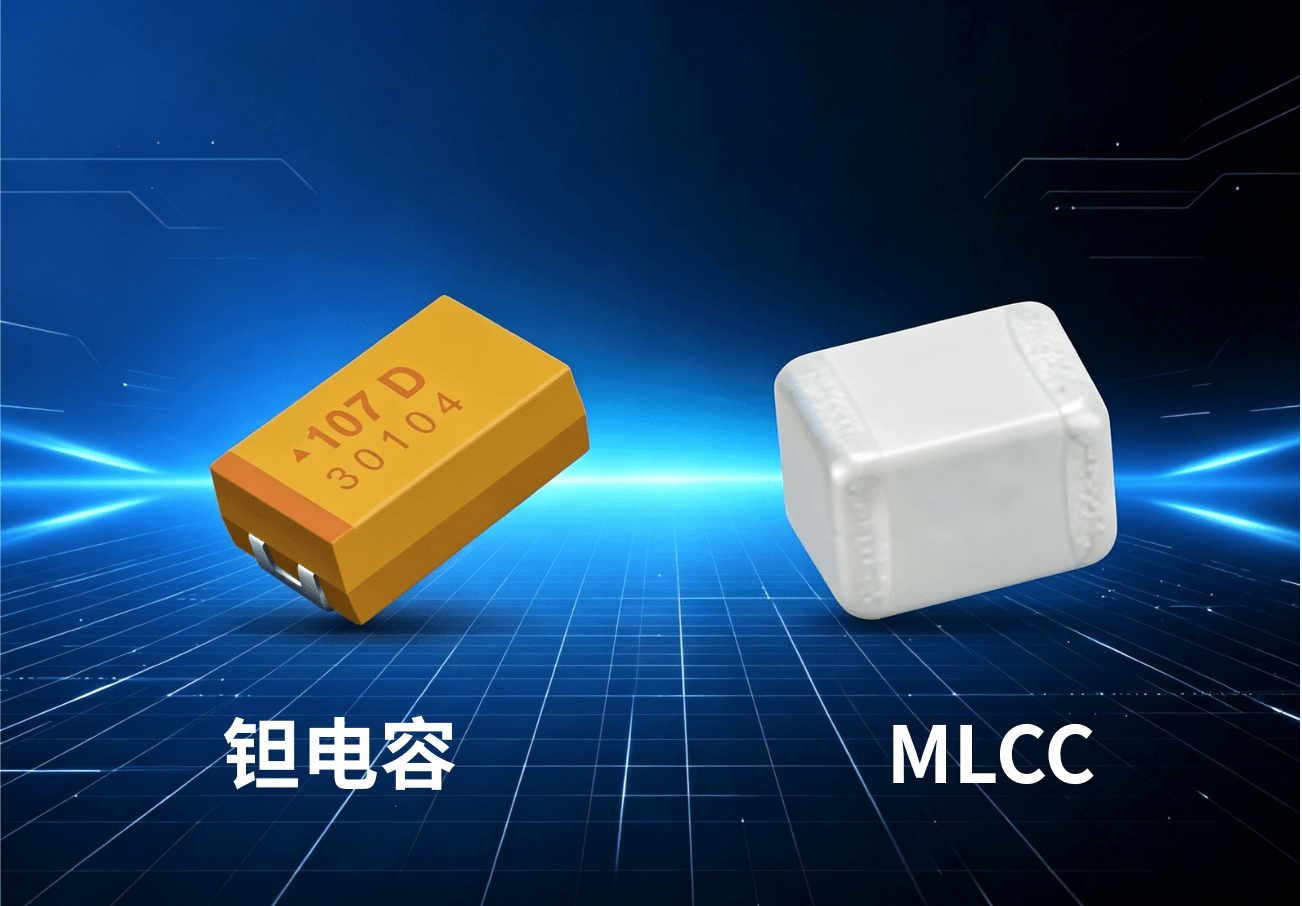
I. Clear Division of Labor Between the Two Capacitors
Before the boom in AI computing power, the application boundaries of tantalum capacitors and MLCCs were clear, each with its own strengths and responsibilities, without large-scale market competition.
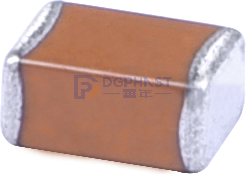
The most common MLCC, or multilayer ceramic capacitor, has the biggest advantage of being small in size and cost-effective, and excellent high-frequency filtering effect. It is widely used in consumer electronics and conventional industrial control products such as mobile phones, small household appliances, and ordinary industrial equipment, mainly responsible for high-frequency noise reduction and filtering. However, MLCC has an unavoidable disadvantage: under the influence of actual working voltage, its effective capacity will be greatly reduced, with a maximum drop of 30%-80%, creating a gap between the labeled parameters and the actual usable capacity.
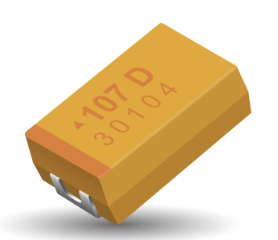
The core advantage of tantalum capacitors is their large capacity and extremely stable performance, with almost no impact from working voltage on its capacity, making it suitable for medium-frequency energy storage and voltage stabilization applications. In harsh working environments with high temperature and high current, tantalum capacitors can maintain stable performance, effectively compensating for the significant capacity degradation of MLCCs.
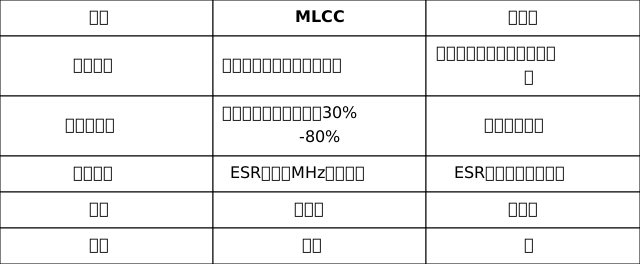
Comprehensive Comparison of Tantalum Capacitors and MLCCs
Simply summarized: MLCC excels at high-frequency filtering and is suitable for general equipment; tantalum capacitors excel at energy storage and voltage stabilization, capable of withstanding harsh working conditions. Previously, most electronic products relied on the combination of the two capacitors to build a complete power supply network.
II. Two Major Driving Factors Promoting the Replacement of Some MLCCs by Tantalum Capacitors
Now, tantalum capacitors are able to capture part of the MLCC market mainly due to two real-world factors: first, the supply chain of MLCC is in short supply, leading to price hikes and shortages; second, the harsh working environment of AI servers amplifies the inherent shortcomings of MLCCs.
1. Shortage of High-End MLCC Production Capacity, Price Hikes and Stockouts Have Become the Norm
The explosive growth of AI servers has led to a sharp increase in demand for high-end MLCCs. Data shows that the demand for MLCCs related to AI in 2026 will reach 72.6 billion pieces, a surge of 87% compared to the previous year. The production capacity of high-end large-capacity MLCCs is now nearly saturated, and the time required for line adjustments and switches is long, directly extending the order cycle to 16-40 weeks.现货 prices have also skyrocketed by 2-3 times, and major manufacturers have issued price increase notices one after another.
At the same time, manufacturers prioritize supplying capacity to higher-profit AI sectors, further compressing the supply of high-end MLCCs for consumer electronics and general industrial control equipment, plunging the entire industry chain into a supply shortage crisis.
2. Harsh Working Conditions of AI Equipment Amplify MLCC's Shortcomings
AI servers consume a lot of power, and the GPU's instantaneous operating current can reach hundreds of amperes, with local areas of the motherboard remaining at high temperatures for extended periods. Under the combined effects of high temperature and high voltage, the effective capacity of MLCCs will severely shrink. If only multiple MLCCs are used in parallel, it would not only occupy a lot of space on the motherboard but also cause circuit interference, affecting the stability of the entire power system.
In contrast, the advantages of polymer tantalum capacitors are fully activated. One polymer tantalum capacitor can perform the same function as 8-15 MLCCs in parallel, greatly saving space on the motherboard.
III. Partial Replacement, Not Complete Replacement
Currently, many people mistakenly believe that "tantalum capacitors will completely replace MLCCs". However, from the perspective of hardware technology and practical application, this situation will not happen. It is essentially that tantalum capacitors have captured some market share of MLCCs in certain high-end scenarios.
MLCC still has irreplaceable core advantages: excellent high-frequency performance, ultra-small size, and high cost-effectiveness. In mass consumer electronics such as mobile phones, wearable devices, and small household appliances, as well as in miniature circuit scenarios like radio frequency, MLCC remains the optimal choice, with no other components able to replace it.
What tantalum capacitors have taken over are high-value scenarios such as medium-frequency energy storage and high-voltage power filtering, mainly applied in high-power, high-end devices such as AI servers, automotive autonomous driving, and vehicle battery management systems. Even in these devices, tantalum capacitors and MLCCs are used together, working collaboratively to complete filtering and energy storage tasks, ensuring the stable operation of the equipment.
This partial replacement has also triggered chain reactions throughout the industry:
First, high-end computing power and automotive equipment have begun to replace capacitor solutions in bulk, with the proportion of tantalum capacitors in hardware design continuously increasing;
Second, major component manufacturers have increased investment in the tantalum capacitor sector, expanding polymer tantalum capacitor production lines;
Third, AI demand has absorbed a large amount of high-end MLCC capacity, squeezing the mid-to-low-end market, and the overall pricing system of the passive component industry has undergone restructuring.
IV. Industry Trends Continue to Improve, Providing Opportunities for Domestic Manufacturers
The explosive growth of AI computing power and automotive electronics has driven the continuous heating of the tantalum capacitor market, with the prices of high-end polymer tantalum capacitors rising sharply, and the industry entering an upturn cycle. Domestic manufacturers have also seized the key opportunity to break through foreign monopolies.
The dual benefits on the demand side have become the core driving force for industry growth. The high-power architecture of AI servers has significantly increased the per-unit usage of tantalum capacitors, achieving an order-of-magnitude growth compared to traditional servers. At the same time, GPU filtering and voltage stabilization, enterprise-level SSD power-off protection, and other scenarios have further increased the installation of high-end tantalum capacitors.
Vehicle-related demand is also strong. Tantalum capacitors are required to have wide temperature ranges and high reliability for BMS battery management systems, intelligent driving controllers, and on-board chargers. On average, each new energy vehicle uses 30-50 tantalum capacitors.
The rigid shortage on the supply side has further intensified the supply-demand contradiction. Global high-end AI-grade polymer tantalum capacitor production capacity is highly concentrated, with top production lines running at full capacity and no large-scale expansion plans in sight. In this context, domestic downstream computing power and car companies are actively promoting supply chain diversification to avoid supply risks, providing an excellent window for domestic manufacturers to verify and introduce products.
This round of industry volume and price increases is not a short-term trend, but rather a key opportunity for supply chain restructuring. As upstream and downstream industries work together to tackle technical and production challenges, domestic tantalum capacitors are expected to continue narrowing the gap with overseas counterparts.
Against the backdrop of the industry trend where tantalum capacitors gradually replace some MLCCs in the context of the AI computing power wave, hardware design must not only conduct performance comparisons of components but also ensure the stability of the supply chain. Shunhai Technology has been deeply involved in the passive component supply chain for many years, covering mainstream brand materials such as MLCC and tantalum capacitors, and has a professional FAE technical team that can provide component selection references, BOM configuration, sample and mass production supply support for AI server and automotive hardware projects.