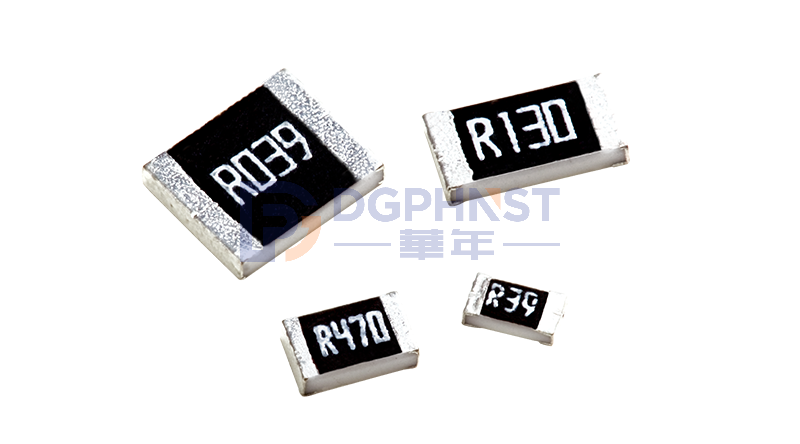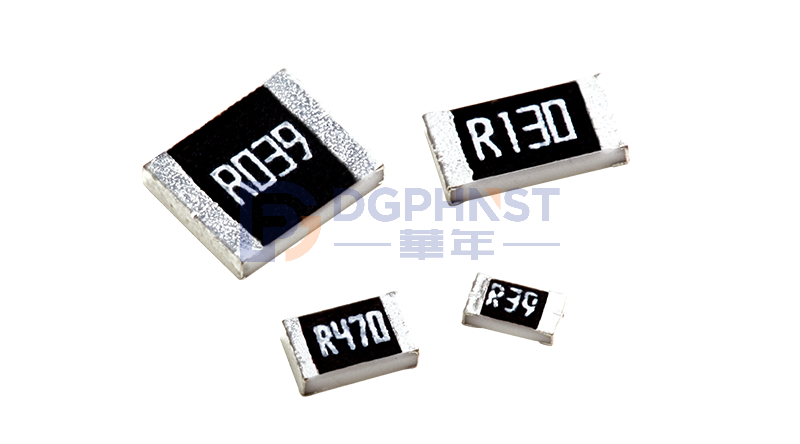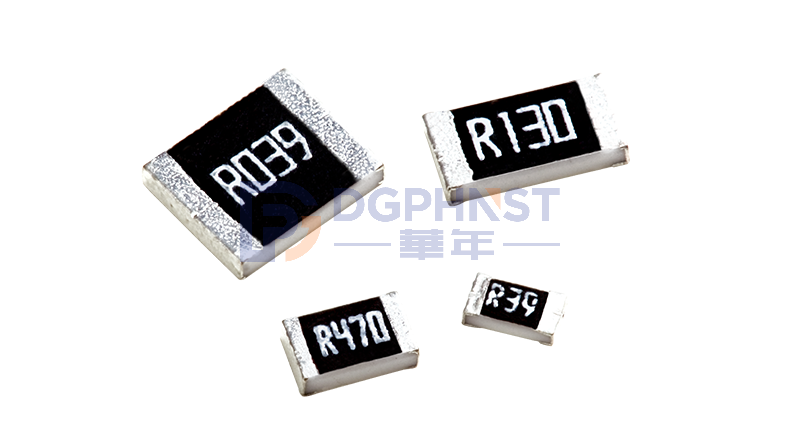
On the development desks of new energy vehicle OBC, energy storage inverters, and industrial servo drives, there is a core component often underestimated but critical to the overall reliability — high-power resistors.
Many engineers still perceive them as simply having a high power rating. However, as downstream equipment accelerates toward higher power density, higher reliability, and longer life, high-power resistors have long surpassed their basic role of "current limiting and voltage dividing" and have become key variables affecting system thermal design, overload capability, and environmental adaptability.
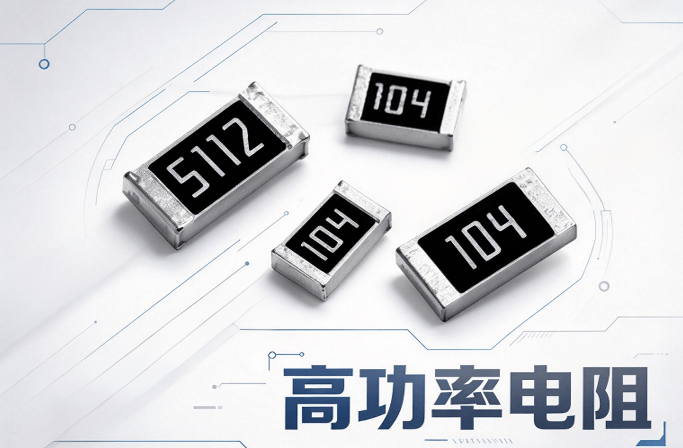
I. The Core of High-Power Resistors: Not "Making Bigger", But "Making Denser"
Many people think that high-power resistors are just about increasing size to boost power. In reality, the core competition in the industry has always been the power dissipation capability per unit package.
Traditional carbon film and metal film resistors rely on thin-film heating, with low power limits and large temperature drift, suitable only for small signal circuits. True high-power resistors are essentially a micro-thermal management system: from the heat resistance level of the resistor material, to the thermal conductivity of the base, and the thermal path design of the packaging and PCB, each link determines the actual available power.
Currently, in mainstream technical routes, alloy power resistors are the preferred choice for medium and large power applications due to their low resistance, high impact resistance, and good long-term stability. Ceramic-based power resistors, on the other hand, have advantages in higher voltage and higher temperature environments.
Their common upgrading direction is to continuously increase power density within the same package size through material and structural optimization. For example, with the same 2512 package, ordinary surface mount resistors have a rated power of only 1W, while high-end alloy power resistors can reach 3W or even 5W, backed by technologies such as aluminum nitride ceramic substrates, thickened alloy layers, and back-side heat dissipation pads.
Hua Nian Mall offers a wide range of high-power resistor products, suitable for power electronics applications in new energy, energy storage, and industrial control. We provide sample testing, parameter selection, and material delivery support, helping engineers quickly complete solution verification.
II. Three Key Technical Directions: Redefining the Boundaries of High-Power Resistors
The current technological iteration of high-power resistors mainly focuses on three dimensions: materials, packaging, and reliability:
1. Continuous Upgrading of Material Systems
Resistor body materials have evolved from early metal glaze and thick film pastes to high-precision alloy materials like copper-manganese alloys, nickel-chromium alloys, and iron-chromium-aluminum alloys. This not only improves pulse shock resistance but also reduces the temperature coefficient of resistance from ±200ppm/℃ to ±50ppm/℃ or even ±20ppm/℃, meeting the high-precision sampling needs of automotive electronics and industrial control.
At the same time, substrate materials have upgraded from aluminum oxide to aluminum nitride and silicon carbide, increasing thermal conductivity by 3 to 5 times and fully opening the "resistor body - substrate - pad - PCB" heat dissipation channel.
2. Innovative Optimization of Packaging Structure
Traditional through-hole power resistors are large in size and low in automation assembly efficiency, being rapidly replaced by surface-mount high-power resistors. To further improve heat dissipation efficiency, designs such as flip chip structures, dual-sided heat dissipation, and insulated metal substrates have emerged. Some products use non-inductive winding or planar structures to eliminate parasitic inductance, making them suitable for high-frequency switching power supplies and RF power amplifiers.
3. Systematic Improvement of Reliability Indicators
The failure of high-power resistors is usually not an instantaneous burnout but rather resistance value drift under long-term high-temperature load. Industry-leading manufacturers have expanded their verification systems beyond simple power load tests to include multi-dimensional environmental tests such as temperature cycling, humidity, salt fog, and pulse shock. Automotive-grade products also need to pass AEC-Q200 certification to ensure stable operation in a wide temperature range of -55°C to +155°C.
III. Four Core Scenarios: Different Selection Logics
The value of high-power resistors ultimately lies in specific applications, where the core demands vary significantly across different scenarios:
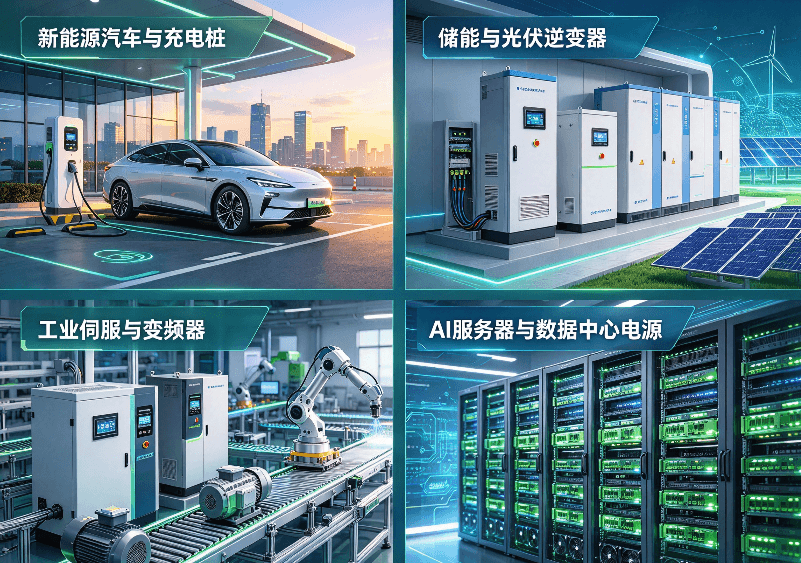
In the field of new energy vehicles and charging piles, OBC on-board chargers, DC-DC converters, and BMS sampling circuits are the core areas. The priority for selection is surge resistance + automotive grade reliability + low temperature drift. For example, power resistors in precharge circuits must withstand millisecond-level high-voltage and high-current surges, while sampling resistors require high precision and low inductance, and must also meet automotive-grade certification to handle complex vibration and temperature changes in vehicles.
In energy storage and photovoltaic inverter scenarios, resistors operate in outdoor high-temperature and high-humidity environments and are under continuous full-load conditions. The focus of selection is on long-term power stability, heat matching, and environmental tolerance, typically using ceramic-based or thick-film power resistors, combined with heat sink designs to ensure a service life of over 10 years.
In industrial servo and inverter applications, motor start-up and braking generate strong pulse loads, and high-frequency switching circuits are sensitive to parasitic inductance. Therefore, non-inductive high-power resistors and braking resistors are the mainstream choices. They must have sufficient pulse power capacity while avoiding circuit oscillations caused by parasitic inductance.
In AI server and data center power modules, high power density is the primary requirement. Surface mount alloy resistors with small packages and high power are commonly used in current sharing and current sampling circuits, enabling high-current detection within limited PCB space while ensuring extremely low resistance error and temperature drift to guarantee precise power supply control.
There are significant differences in selection across different application scenarios, and many engineers struggle with model selection and sample cycles. Hua Nian Mall can recommend matching high-power resistor models based on different end-use conditions, assist in evaluating key indicators such as pulse load, thermal design, and parasitic inductance, and shorten the R&D cycle of projects.
IV. Industry Trends: From "Standard Components" to "Custom Solutions"
Previously, high-power resistors were considered general-purpose standard components, with selection based solely on power, resistance value, and package. However, as downstream applications become more fragmented and refined, the industry is showing two clear trends:
Firstly, power density improvement has no end. Consumer electronics, automotive electronics, and industrial equipment are all moving toward miniaturization and lightweighting, leaving less space for resistors, yet system power continues to rise. This forces manufacturers to constantly break the limits of materials and packaging, with power levels increasing by one level every 2-3 years in the same package size, making "small volume bearing large power" a long-term technical trend.
Secondly, customization demand is growing rapidly. Different terminal customers have varying PCB layouts, heat dissipation conditions, and load characteristics, making standard products difficult to balance performance and cost. Leading manufacturers are shifting from "selling components" to "providing power solutions", customizing resistor materials, packages, and resistance values based on customer thermal design boundaries, load curves, and environmental parameters, and even offering complementary heat dissipation design suggestions.
In Conclusion
From material iteration, structural optimization to reliability upgrades, from standardized products to scenario-specific customized solutions, the technological evolution of high-power resistors has always aligned with the development pace of downstream industries such as new energy, industrial control, and computing infrastructure.
Under the wave of miniaturization, high reliability, and long endurance of high-end equipment, this underestimated core component will continue to make up for device performance shortcomings through technological innovation, becoming an important support for the high-quality development of the power electronics industry. The industry will continue to break through and move forward steadily along the path of refinement and customization.