High-Power Resistors vs. Ordinary Resistors: Selection Logic and Brand Landscape
In circuit design, resistor selection is often reduced to resistance value and tolerance, but the difference between high-power resistors and ordinary ones goes far beyond the rated power figure. Understanding this distinction is a prerequisite for avoiding either over-engineering or insufficient reliability.
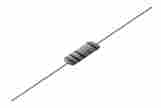
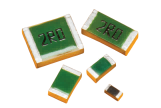
The core difference lies in thermal management capability, not merely the power number. Ordinary resistors—such as common 1/8W or 1/4W thick-film chips—are optimized for signal conditioning and voltage division, with package heat paths sized only for minimal self-heating. High-power resistors, by contrast, are engineered from substrate material to electrode geometry around one question: how to extract heat efficiently. KOA’s wide-terminal chip resistors, for instance, reduce thermal resistance by widening the electrodes, achieving higher rated power in the same footprint. Susumu’s KRL series for motor control and current sensing uses long-side terminal structures to handle large currents and improve heat dissipation. The value of a high-power resistor is therefore the ability to dissipate more power within a constrained board area—not a universal superiority. If actual dissipation is well below an ordinary resistor’s rating, choosing a high-power part only adds cost and layout burden.
The decisive selection criterion is the derating curve under actual operating conditions. Rated power for high-power resistors is typically specified at 25°C or 70°C ambient, and must be linearly derated as temperature rises. Yageo’s FMP metal-film series requires derating above 70°C ambient. Evaluating whether a high-power resistor is “sufficient” therefore demands more than the headline wattage: maximum operating temperature, pulse load characteristics, and thermal environment all matter. For surge or pulse-heavy applications, wirewound types offer better pulse tolerance than metal-oxide-film types, though their parasitic inductance requires caution in high-frequency circuits. For low-resistance current sensing, alloy or four-terminal structures are more appropriate.
The supplier landscape is layered, with each brand emphasizing different strengths. Ever Ohms has accumulated depth in specialty chip resistors; its high-power and alloy series cover power supply and battery management applications, with a clear focus on power density in larger case sizes. ELLON’s power resistor portfolio is notable for its completeness: EHP thick-film high-power, EGM metal-film surge-resistant, and ESR alloy current-sense types form a tiered structure suited to multi-category localization efforts. Yageo, as a broad-line manufacturer, offers extensive coverage—the FMP metal-film series for industrial use and AC automotive series for vehicle electronics—with supply stability as its primary advantage. Uniohm maintains scale in thick-film resistors, with high-power variants common in consumer electronics and power modules. KOA concentrates on thermal architecture and pulse tolerance, with its wide-terminal and SG73 series offering distinct technical differentiation in compact high-power scenarios. SUSUMU leverages thin-film expertise, and its high-power low-resistance products bring low parasitic inductance to current sensing and high-frequency applications.
In procurement, authorized channel support often matters more than datasheet parameters. Shenzhen Shunhai Technology serves as an authorized distributor for Ever Ohms and other brands, with practical experience in power resistor and current-sense resistor selection. Huanian Mall provides online access to Ever Ohms’ full resistor line, suitable for both prototype sampling and volume production ramp-up. For designers validating a high-power resistor approach, obtaining samples and technical support through authorized channels is more reliable than price-shopping unauthorized sources, which carries risks of mislabeled parameters and batch inconsistency.
Returning to the original question: whether a high-power resistor is “better” depends entirely on the circuit’s real demands. In compact designs with tight thermal headroom, a properly derated high-power resistor can indeed reduce failure rates. But in micro-power signal loops, an ordinary resistor is the more economical and rational choice. The essence of selection is not pursuing a “superior” component, but matching the device’s thermal capability to the actual stress the circuit imposes.