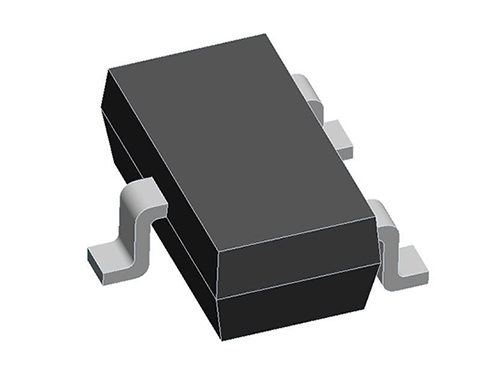
A transistor is an electronic component made of semiconductor materials and is the core foundational component of modern electronic devices. Its core function is to control a large current output through small input signals, thereby achieving functions such as signal amplification, switch control, and logic operations.
Structure and Type
Transistors are made of semiconductor materials such as silicon or germanium and typically consist of three electrodes:
The emitter and collector are responsible for current input and output.
Base or Gate - Control current on/off by applying a small voltage.
According to their different structures, transistors are mainly divided into two categories: bipolar transistors (BJTs) and field-effect transistors (FETs), with the latter being more widely used in modern integrated circuits.
Core functions
Signal amplification: Small voltage changes at the base/gate can adjust the current from the emitter to the collector, achieving signal amplification. For example, after a microphone converts sound into an electrical signal, a transistor can amplify it to drive a speaker.
Electronic switch: Transistors can switch between conduction (on) and cutoff (off) states at extremely high speeds (billions of times per second), becoming the fundamental unit for binary (0 and 1) operations in digital circuits. Computer processors rely on billions of transistors working together to complete calculations.
Application and Significance
Transistors were invented by Bell Laboratories in 1947, gradually replacing bulky and inefficient vacuum tubes and sparking a revolution in electronic technology. Its miniaturization, low power consumption, and high reliability have driven the development of integrated circuits, reducing the size of computers from rooms to pocket devices. From smartphones, satellite communication to artificial intelligence chips, transistors are the cornerstone for achieving complex functions.
Transistors enhance electronic control capabilities to the microscopic level through their semiconductor properties, serving as both the "cells" of the information age and the bridge connecting the physical and digital worlds. Its technological evolution, such as nanoscale processes, continues to push the boundaries of human technology.